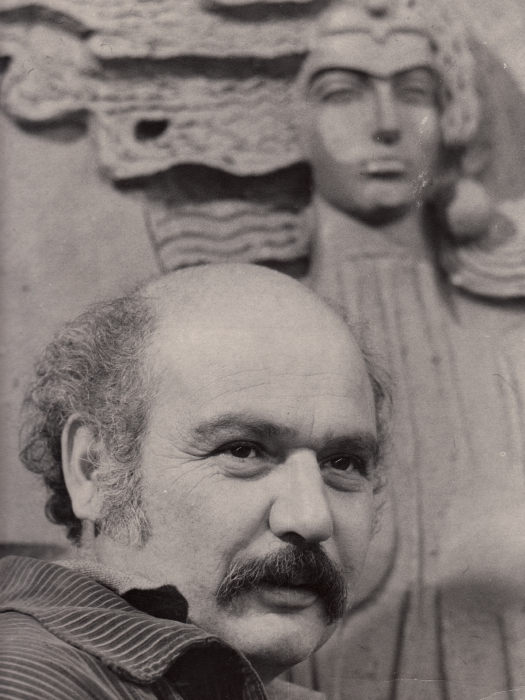
One of the shots of the tenth issue of "Dalma" was shot in one of the most magical and hidden places in Yerevan - in the studio of the famous sculptor Ara Harutyunyan. This is a good reason to recall his most important works, from "Mother Armenia" to "statue of a worker".
19.05.2026
ARA HARUTYUNYAN
ARA HARUTYUNYAN
The author of one of the main symbols of Armenia, the Yerevan "Mother of Armenia" Ara Harutyunyan (1928-1999) was born in Yerevan, graduated from the Yerevan Art College named after Panos Terlemezyan in 1948, and the Yerevan Art and Theater Institute in 1954.
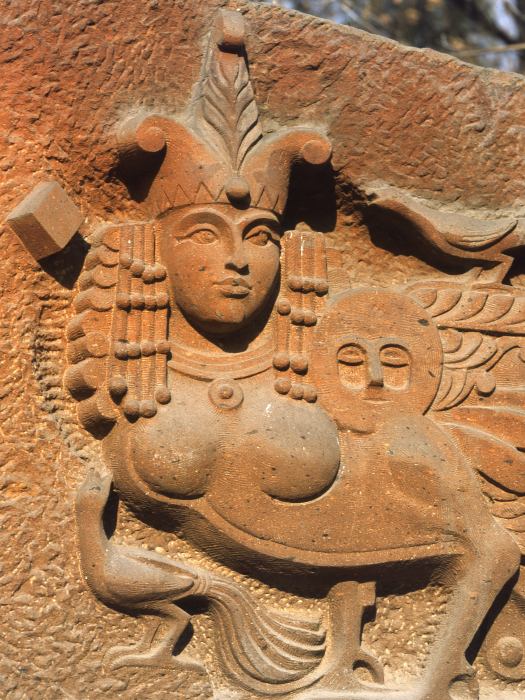
The heyday of the sculptor's art was the 1960s. In those years, Harutyunyan created a number of examples of easel sculpture, as well as monumental sculpture and decorative relief. Ara Harutyunyan's contribution is great not only in sculpture, but also in the "cooperation" of sculpture and architecture, in particular, in the integration of sculpture into the exterior and interior of public buildings. Harutyunyan was interested in topics relevant to his time, as well as folklore and mythology.
A source of inspiration
The sculptor was largely inspired by the themes of folk folklore, the national stylistic language and the best traditions of Armenian medieval sculpture, creating generalized and large statues and often high-reliefs with expressive and clear linear solutions. One of such expressive and large-scale works is the aforementioned "Mother Armenia" (1967). The 22-meter-high 15-ton hardened copper statue, mounted on an iron frame, is one of the sculptor's masterpieces. He has once again become a symbol not only of Yerevan, but of the whole of Armenia. The sculptor portrays Armenia as a woman with pronounced facial features, ready to defend her Homeland, but at the same time in a calm and firm position.
Other notable works by Ara Harutyunyan include bas-reliefs depicting the monumental and expressive rhythms of the Northern and Southern Entrances of the capital (1965, 1966), depicting the Armenian King Artavazd II from the Sundukyan State Academic Theater and images symbolizing theatrical art.